How to Cut the Crap and Actually Be Productive as a Creative Person
Today we’re going to talk about everyone’s favorite subject: productivity. More importantly, we’ll discuss why your current system doesn’t work, why traditional company structures suck and how to wrangle your creative brain into submission.
If you’ve been waiting for an eye-opening discussion into what’s really wrong with your workflow and why your $50 todo list app isn’t fixing it, this is your lucky day.
2 Million+ Digital Assets, With Unlimited Downloads
Get unlimited downloads of 2 million+ design resources, themes, templates, photos, graphics and more. Envato Elements starts at $16 per month, and is the best creative subscription we've ever seen.

Getting Things Done
GTD: Getting Things Done. You know this term well and you’re familiar with the systems, apps, books and countless other products surrounding it. You try out every new productivity solution you can find in hopes that you’ll finally find that one magic solution that solves all your problems.
The interesting this is, you’re fighting against the very thing that makes you good at what you do: your creative brain. As creatives, we tend to think differently and more importantly, work differently than a lot of other professions. On reason for this is that we’re very non-linear in what we do and don’t have clearly definable tasks in front of us.
For instance, take a look at the design tasks currently occupying you to do list. Are they really easy to quantify? A flyer design, will it take a half an hour or all day? A full website visual overhaul, will this take a week or a month? The truth is, you’ve experienced both situations and know it could go either way. Creativity comes in waves and sometimes it takes you hours to do something you’ve done before in only a few minutes.
So what is the solution to this problem? If standard GTD systems don’t help, then what will? What are the real productivity killers in the workplace and how do you avoid them?
A Solution
By now you should be nodding your head. If the description above seems to match you fairly well, then you’re in search of a solution. Fortunately for you, there’s a fast-spreading movement happening in the creative world aimed right at solving this problem.
One of the most powerful figures in this movement is Jason Fried: Co-Founder of 37signals. Fried co-authored a book called Rework that is a profound eye opener for anyone familiar with the modern business world or looking to start their own company. Rework directly and forcefully challenges nearly every familiar convention in the way companies manage their employees and discusses both why the system doesn’t work and how to fix it.
Another great force in this movement is Behance, creative powerhouse and developers of the Action Method, a refreshingly different approach to productivity and project management. Their blog The 99 Percent is a source of some really sound creative productivity advice.
There are plenty more players in this game but these two will serve as the primary inspiration for today’s discussion. When you take in the collective ideas and advice of these two sources you begin to see a common theme. This theme is in fact a mantra that truly productive creatives have been chanting for years. It’s time to listen.
Why Work Doesn’t Happen at Work
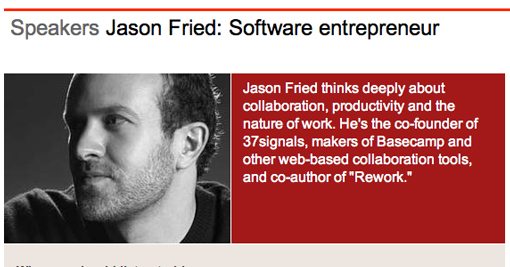
We’ll start with Jason Fried. He recently gave a speech at a TED conference titled “Why Work Doesn’t Happen at Work”. This brief talk just a taste of the awesome advice you’ll find in Rework (seriously, go buy the book).
In his speech, Fried paints a picture of a modern company. They build or lease a building, fill it with expensive equipment and furniture and force their employees to work there so they can keep an eye on them. Jason notes however that when people are asked where they go to really get some work done, the answer is almost always some place quiet where they can focus undistracted.
Fried goes on to outline how this concept of distractions is a major problem with the corporate workplace. He states that by going to work you trade in your work day for “a series of work moments.” What’s the source of all these distractions? Not Facebook and Twitter says Fried, but instead “managers and meetings.”
Managers interrupt your natural flow of work to “check in” and meetings completely destroy your day. Fried goes so far as to label meetings as “toxic” because they are extremely costly to a company. A one hour meeting with ten people doesn’t cost a company one hour of productivity but ten!
I won’t reiterate the entire speech because you really should watch it yourself, but Fried’s message is largely that the heart of the problems with productivity lies in interruptions. The solution of course is that companies need to allow their workers to have large chunks of interruption-free productivity. No talking, no meetings, just leave them alone and let them work.
Getting Creative Things Done
Cal Newport writing for The 99 Percent published an article titled “Getting Creative Things Done: How To Fit Hard Thinking Into a Busy Schedule.” This is a really quick read with some life-changing implications for creatives.
In this article, Newport directly addresses the problem mentioned above regarding quantifying goals for creative work. He accepts that a simple to do list with tasks is insufficient for designers because what they really need is long stretches of uninterrupted work. The problem however is that creative people simply can’t sit down at their desk and just decided to work distraction free for the entire day.
He suggests a system where you first outline your big projects for the week. Then you block out 2-3 hour sections of time each day to dedicate to a project (you must be strict about it). You should also set rules for this period of time and outline what isn’t allowed: email, IM, etc. The key to the entire exercise though is to focus on the process and not on goals. Newport states that “Creative work is not a task to be checked off a next actions list.” Instead you need to focus on experimentation and getting into the mindset where creativity takes place.
Friedman stated the same thing by pointing out that work happens in phases. Creatives can’t just turn on creative thinking and churn out amazing ideas, they have to work to get to that place and each interruption takes them back to multiple phases in the process.
The Common Theme
By now you should be picking up on the common theme. Being productive as a creative person isn’t just about making task lists. Like it or not, simply writing down the things that you need to do doesn’t really do much at all towards ensuring that they get done.
Instead, you need to focus on how to get yourself into that magical phase where creativity actually takes place. This may be a little different for everyone. Some need a quiet room, others a busy coffee shop or some loud music, but all of us could benefit from finding ways to incorporate a few hours of uninterrupted work into our schedules as often as possible.
If only there were a productivity system already geared towards this kind of workflow right? Well you’re in luck, because there is, and it’s been around since 1992!
The Pomodoro Technique
You’ve probably heard of the Pomodoro technique before, and maybe you’ve even tried it. But have you really give it a decent shot and tried to apply it in a manner that honors all the information we just discussed?
For those of you who aren’t familiar with the Pomodoro technique, here’s the gist from PomodoroTechnique.com
- Choose a task to be accomplished
- Set the Pomodoro to 25 minutes (the Pomodoro is the timer)
- Work on the task until the Pomodoro rings, then put a check on your sheet of paper
- Take a short break (5 minutes is OK)
- Every 4 Pomodoros take a longer break
You can see how this system is geared entirely towards focusing on your work for uninterrupted periods of time, just like we heard from the advice above. One potential problem with this system is that 25 minutes may not be long enough for designers. For many of us, it can take thirty minutes or more to finally hit that zone where we’re actually going strong and taking a break at that point might kill that progress and force you to start over.
The solution is simple, simply follow this technique and make your sessions longer. Ultimately, your brain is going to be different than anyone else’s so the number is not as important as really dedicating yourself to the system. Experiment with a few different session lengths until you find one that works for you, whether it’s 25 minutes or 3 hours.
Focus Booster
No GTD system is worth pursuing if there’s no cool free app to help you out! I mentioned this application briefly in a recent article but it’s good enough to bring up again here.
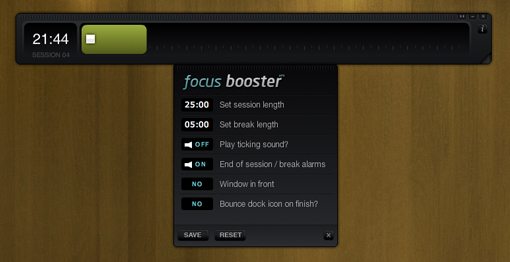
Focus booster is a free Adobe AIR app (and web app) that is built around the Pomodoro system. You can set your session length and your break length and the simple but attractive timer will help you manage your Pomodoro sessions!
Mac users may also want to check out the Pomodoro menu bar application, an awesome and free tool with lots of great features.
Conclusion
To sum up, Jason Fried and the Behance blog The 99 Percent are just two of the many sources right now pointing out that our current way of working is broken. Countless supposedly “necessary” interruptions are completely destroying any chance we have at true productivity.
It’s time for managers to cancel the meetings and for freelancers to manage email and IM after they’ve actually gotten in some solid work. It’s time to discover the power of working uninterrupted for long stretches of time and balancing this productivity with the breaks your mind needs. It’s time to actually get things done rather than spend our days fiddling with to do lists.
Leave a comment below and let us know your thoughts about the content above. Have you read Rework or listened to Fried’s speech? Have you really tried the Pomodoro technique with dedication? What other tools and tips have you found for reaching true creative productivity? We want to know!