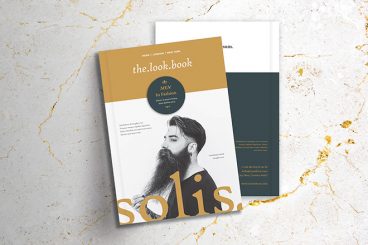
Every brand, from the smallest website or startup, to corporate giants such as Nike or McDonald’s, need a set of branding guidelines and rules to maintain their identity. This document, which can range from a couple of pages, to several hundred, is the thread that holds together what the public sees from a company.
A brand bible establishes the voice and personality of a company, as well as who the public will see, and it governs every aspect of communication from the company. The brand bible is the basis for all interactions on behalf of a company – personal communications, social media, advertising and design. While a brand bible focuses on many things, we are really going to look at how it affects design.
May 13th, 2013 Posted in Graphics

Web apps are becoming ever-more prevalent on the internet. Some may argue that they are simply more complicated websites. Regardless of their definition; what happens when you are designing for large amounts of constantly fluctuating data?
There are a few examples of data driven interfaces and they all have to handle a lot of varied data that is constantly changing. The most common are admin areas and analytic dashboards. The data can take many forms; graphs, charts, tables or text. Each can be displayed in a variety of different ways depending on the context and meaning you are trying to convey with the data. One thing to remember is that you can rarely be sure of the length or amount of data you need to cater for; so think simple to start…
April 15th, 2013 Posted in Graphics, Layouts

Most people who need to create an exciting presentation are not design experts. Fortunately, there are a number of really neat tools and websites that can assist you in creating a captivating, professional look for your slides.
In this article, we’re going to take a look at five such tools. While I can’t promise that these tools alone will turn you into a design professional, they will certainly point you in the right direction.
February 20th, 2013 Posted in Graphics

American Airlines has had the same logo for forty-five years. That’s definitely a pretty impressive stretch! They’ve decided to hang up their Helvetica though and look to not only a new typeface, but a new eagle and even a new livery design.
Read on to see the logic behind the new design and whether or not I think it’s another chapter in a long line of recent brand redesigns gone bad.
January 23rd, 2013 Posted in Graphics

One of the most powerful tools that you can use to improve any design is repetition. Repeating colors, shapes and other visual elements throughout a design increases consistency and familiarity so that the design feels more attractive.
But what about the flip side of this idea? Is it possible to wield inconsistency in such a way that it improves the quality of a design? It turns out that lots of well known logos use this very tactic. Read on to see what they are.
November 7th, 2012 Posted in Graphics

Rules. They keep our designs clean, consistent, aligned, and focused. The core principles upon which good design is built are absolutely essential to the education of any designer.
The great thing about design rules though is that they can and should be broken, granted that you know what you’re doing. Read on to see some examples of effectively breaking design principles in order to improve a project.
October 24th, 2012 Posted in Graphics

Today’s topic is a delicious one: restaurant and food websites. Small businesses pay the bills for freelance designers and local restaurants can serve as a major source of revenue. If you’re embarking on your first restaurant site design though, there are a few things that you should know.
In this article, we’ll learn by example as we take a look at lots of mouthwatering food and restaurant websites. By examining what these designers got right, you’ll help ensure your own success in this area.
October 17th, 2012 Posted in Graphics

Twitter recently rolled out an updated design for profile pages, which allows you to insert a new “header photo” that sits on top of your feed, much like Facebook’s timeline cover image.
Today we’re going to dive in and see some examples of good Twitter profile images and discuss how you can design your own. I’ll even toss in a free template so you can get started right away.
September 20th, 2012 Posted in Graphics

You’re a web designer living large in the 21st century. Your job is defined by screens and software. What in the world could you possibly learn about design from a bunch of old dusty print ads? The answer of course, is “a ton.”
Today we’re kicking off a new series that examines some of the most famous print ad campaigns of all time. First up is my personal favorite, the Volkswagen “Think Small” campaign. How did a funny looking car that was named after a bug, known for being slow and manufactured in factories built by Nazis ever become iconic to a generation of post-war Americans? Great design and fantastic marketing.
August 23rd, 2012 Posted in Graphics

Consistency in UI design is an old school principle and somewhat forgotten in some of today’s web and application designs. It seems like designers are choosing to omit consistency from their interfaces.
In the case of mobile application design, some designers are choosing to re-invent, re-create or even completely break the hardware standard interactions with their own unique interface patterns. While breaking the consistency between the hardware UI rules and your apps experience may not be a bad idea, breaking your own apps consistency can be.
August 3rd, 2012 Posted in Graphics