Search Results For: text

5 Steps to Drastically Improve Your CSS Knowledge in 24 Hours

CSS / 18 Oct 2013

5 Steps to Drastically Improve Your CSS Knowledge in 24 Hours

You’ve been coding for a while now and know your way around a CSS file. You’re certainly no master, but with enough fiddling you can get where you want to go. You’re wondering though if you’ll ever get past that point where CSS is such a struggle. Will you ever be able to bust out a complex layout without ultimately resorting to trial and error to see what works and what doesn’t?

The good news is that you can indeed get past that frustrating point where you know enough CSS to code a website, but lack the solid foundation that allows you to code without the annoyance of not exactly understanding how you’re going to get where you’re going, and this point is a lot closer than you think. I propose that there are five topics that will drastically boost your understanding of CSS. Spend some time reading about each over the next twenty-four hours and you’ll change the way you code forever.
Designing With Circles: Tips and Advice

Graphics / 3 Oct 2013

Designing With Circles: Tips and Advice

Once shunned by designers, circles seem to be making a comeback. The perfectly round shape – and its oblong counterparts – can be difficult to work with. The shape does not stack as well as the more standard rectangle and creates a much different overall feel.

The circle is a perfect shape, meaning that it is the same no matter how you look at it. It is complete and in harmony with nature – consider how many natural elements are circle-based. So, as a designer, how can you make circles work for you?

Do You Need a Style Guide?

Business / 2 Sep 2013

Do You Need a Style Guide?

It’s a simple question: Do you need a style guide? And it has a simple answer: Yes. Any brand, company, blog or webpage that wants to create and maintain consistency and a professional feel should have a style guide.

Style guides are a must for any publisher with multiple employees. This is especially important if more than one person will work on any brand elements (from the website to printed materials), and to ensure that transitions between employees are seamless in the eyes of users. Today, we take a look at well-documented style guide from MailChimp, and highlight things you can take away in creating your own document for the first time.

10 Printing Terms You Need to Know

Business / 7 Aug 2013

10 Printing Terms You Need to Know

More and more designers these days are working in a variety of mediums — both digital and print. But it can take a different set of specifications to put together a successful project for each. Print design has its own jargon.

Understanding how printing works (and how to speak the language of printers) is important for any designer. Don’t think this applies to you because most of your business is web-based? Consider this: At some point a client will ask for print components to go with the website, whether they are business cards or posters or just a great handout for presentations. Knowing the printing basics and terminology will help you bridge the gap. Here are ten key terms you need to know.

Current Color Trends: Muted Pastels

Graphics / 30 Jul 2013

Current Color Trends: Muted Pastels

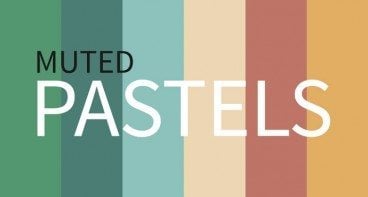
Of late, you may have noticed a crop of new site designs have a softer and lighter look. After all the rainbow brights and even neon or fluorescent hues that have been so popular of late, it seems that some designers are taking a more subtle approach by using lighter or muted colors.

Although the same basic treatments are still being utilized — like colorized photography or color blocking — the new hues are making for a more refined and understated variation on these themes. Today we’re going to delve into this trend a little more, and explore various design examples and approaches.

The Importance of Designing for Readability

Mobile / 22 Jul 2013

The Importance of Designing for Readability

Text is not an afterthought in the design process. It should be your first consideration.

Readability should be one of the top concerns when it comes to any design project. If text can’t be read, then why are you designing in the first place? Good design delivers content in a way that is understandable; readability is a big part of comprehension. Today we’ll be discussing how you can plan a design around the words, so that your projects are easy to read.

Create Shaped Avatars With CSS and Webkit

CSS / 29 Jun 2013

Create Shaped Avatars With CSS and Webkit

In case you haven’t noticed, square avatars are so 2010. These days circles are all the rage. Every app worth its salt, from Path to Basecamp, is jumping on board this fad and waving goodbye to the squares who are stuck in the past.

Ever the forward thinker, I asked myself, “what’s next?” Let’s look beyond squares and circles and into the future of the avatar! Using CSS and Webkit, we can use pretty much any shape as the mask for an avatar. Let’s see how.

How to Design a Resume That Stands Out

CV & Resume Templates / 24 Jun 2013

How to Design a Resume That Stands Out

Resumes are everywhere. They can be good, bad or downright embarrassing. But one thing is certain — if you want a job, yours must stand out in a good way. The design needs to reflect your personality, and the information needs to be organized, relevant and spot-on.

More often than not in today’s job market, you may even have several versions of your resume; one tailored toward different types of companies, one for potential clients or another as a showcase piece in your portfolio.

Understanding Agile Design and Why It’s Important

Business / 19 Jun 2013

Understanding Agile Design and Why It’s Important

It’s no secret that the agile development process has been hurtling through the development world for several years now, swatting aside the older, clunkier waterfall development method. To be fair, whether it was agile or something else, waterfall really had it coming, as its risk-averse, top down approach just can’t keep pace with the demands of today’s marketplace.

While similar changes are occurring in the design world, the agile design process should necessarily look and feel a little different than agile development; they are, after all, different disciplines. Let’s take a deeper look first at what agile development is, and then at a few great ways to adapt the process to the design world.

Tips and Advice for a Design Portfolio Review

Business / 30 May 2013

Tips and Advice for a Design Portfolio Review

For every member of the design community – designers, photographers and illustrators – the portfolio is an essential tool when it comes to getting new clients or changing jobs.

The portfolio review can be one of the more stressful parts of your career. It can be tough to take criticism and hear things you may not want to about your work. A good portfolio review will make you better and it is just as important to understand how to receive a review as well as give a good one.

Pinterest for Designers: Using It to Your Advantage

Inspiration / 22 May 2013

Pinterest for Designers: Using It to Your Advantage

Design inspiration is all around us. And every day there are new tools popping up to help us collect and share that inspiration. One of those great tools is Pinterest. The image collection platform is a fantastic source of design inspiration, from typography to print, web or packaging design.

Newer additions to the service, such as boards for business and hidden boards make the tool even more useful. Haven’t gotten on board with Pinterest yet? Not sure how to make it work for you? Read on.

How to Choose Effective and Attractive Icons in Your Designs

Graphics / 20 May 2013

How to Choose Effective and Attractive Icons in Your Designs

Icons can be considered one of the universalities of web design; almost any website benefits from the addition of at least a few of them. So it’s tempting to assume that if you sprinkle in a handful of these little pictures, your job is done. But there’s a lot more to it than that: good icons should feel like they’re visually integrated into the group of images that they’re in, as well as into the site design as a whole. They need to have a conceptual clarity and purpose that goes beyond being mere eye candy. Any icon that doesn’t serve a stated purpose, or doesn’t convey the right concept in its imagery, is one that needs to be reconsidered.

Of course, there’s room for interpretation and generalization with any kind of imagery, but icons are not mere illustrations that are used purely to break up space and add interest: they’re visual metaphors that can invest meaning into a subject at a single glance; and as such, they’re a powerful tool for improving user experiences.