Accessibility

Advice on how to make your websites and design projects perfectly accessibile to any person, device, or place.

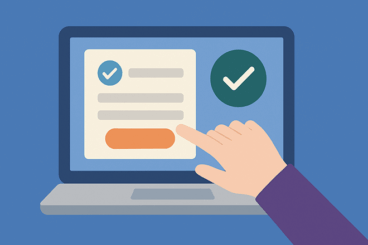
Designing Accessible Forms: Small Fixes, Big Impact

Accessibility / 20 Jun 2025

Designing Accessible Forms: Small Fixes, Big Impact

Accessible forms are a crucial part of inclusive design.

They help ensure that everyone, whether using a keyboard, screen reader, voice input, or assistive device, can complete the same tasks as any other user.

But too often, forms are designed without considering how users of all abilities will experience them. The result? Frustration, mistakes, and even abandonment.

The good news is that improving form accessibility doesn’t require a complete redesign. In fact, small adjustments can make a huge difference.

In this post, we’ll explore practical ways to make your forms more accessible, easy to use, and user-friendly for everyone.

Color Accessibility Beyond Contrast: Designing for Color Perception

Accessibility / 9 Jun 2025

Color Accessibility Beyond Contrast: Designing for Color Perception

When discussing color accessibility, contrast tends to be the focus, and for good reason.

High contrast between text and background improves readability for users with low vision. But accessibility goes beyond just contrast ratios.

You also need to think about how people perceive color, especially users with color vision deficiencies or cognitive differences that affect how color is processed.

Designing with inclusive color in mind means understanding how people see and interpret color differently. It’s about using color in a way that communicates clearly, even when hue alone isn’t enough.

In this post, we explore how color perception works, why it matters in design, and what you can do to make your designs more inclusive and effective for everyone.

Designing Accessible Email Templates That Work Everywhere

Email Templates / 7 Jun 2025

Designing Accessible Email Templates That Work Everywhere

Email remains one of the most powerful tools for communication, but its effectiveness hinges on one important factor—accessibility.

A well-designed email should be easy to read, navigate, and engage with for everyone, including people using screen readers, those with visual impairments, and users on mobile devices.

Today, accessibility isn’t just a nice-to-have feature; it’s expected. But creating an email that works for every reader across every device and platform is no small feat.

Between countless email clients, dark mode preferences, and accessibility standards, designers and marketers need to be more intentional than ever.

In this post, we’ll explore the key elements of email UX and designing accessible email templates to make sure your message gets through clearly and inclusively.

Voice UI & Accessibility: Designing for a Screenless World

Accessibility / 4 Jun 2025

Voice UI & Accessibility: Designing for a Screenless World

We’re entering a world where screens are no longer the only way people interact with technology.

From smart speakers to voice assistants on phones and wearables, Voice User Interfaces (VUIs) are reshaping how we search, shop, and connect.

And with that shift comes a growing need for designers to think beyond the screen, especially when it comes to accessibility.

Designing for voice isn’t just a matter of function. It’s about inclusion.

For many users with visual impairments, mobility limitations, or cognitive challenges, voice technology opens up new ways to engage with digital content independently. But for voice to truly be accessible, it must be thoughtfully designed.

In this post, we’ll explore the role of voice interfaces in accessible design, the challenges they present, and how to create voice experiences that are inclusive, intuitive, and effective in a screenless world.

Why Accessibility Improves SEO (And Why You Should Care)

Accessibility / 28 Jan 2025

Why Accessibility Improves SEO (And Why You Should Care)

Website accessibility and SEO go hand in hand. They basically share the same goal of creating a user-friendly, easy-to-navigate website that is accessible to a wider audience.

However, most websites on the Internet are still not fully optimized for accessibility. According to a survey, 88% of 63,000 websites were found not to be compliant with web accessibility guidelines.

Thankfully, the awareness of the importance and many benefits of web accessibility is on the rise. Today, we want to shed some light on yet another benefit of optimizing a website for accessibility—SEO!

That’s right! Web accessibility helps improve websites for search engines in many different ways. Here’s how.

Dark Mode and Accessibility: Finding the Right Balance

Accessibility / 22 Jan 2025

Dark Mode and Accessibility: Finding the Right Balance

It didn’t take long for the “dark mode” to become a requirement for every user interface design. What started out as a design trend turned into a must-have feature for offering a comfortable user experience.

Due to its popularity, every type of design, from the UIs of operating systems on computers to websites, mobile apps, and even print designs now features a dark mode option.

According to a survey by Android Authority, 81.2% of 2,514 users claimed they prefer dark mode on their phones over light mode. It’s quite effective on desktop as well. After switching to a dark mode theme, a company was able to reduce the bounce rate by 60% and boost pageviews by 170% on their website.

But not everyone gets it right. Dark mode design is more than about adding a black background to a design. It’s about improving accessibility while balancing aesthetics at the same time. This process comes with some challenges as well.

In this post, we explore the importance of implementing dark mode in designs and discuss the benefits and the challenges that come with it. Let’s dive in.

Beyond Alt Text: Overlooked Accessibility Features You Should Be Using

Accessibility / 14 Jan 2025

Beyond Alt Text: Overlooked Accessibility Features You Should Be Using

When it comes to creating accessible designs, we always think of the basics, like adding alt-text, translations, and color palettes. But there’s more to accessibility than those basic features.

Creating an accessible website involves using clear navigation, easy-to-understand multimedia, color contrast, and elements that can be used by all. Unfortunately, most of these accessibility features often go overlooked.

In this post, we want to highlight the importance of these underused accessibility features and explain why you should implement them in your website and UX design projects to create more accessible experiences.

Let’s dive in.

10 Rules for Designing for Inclusivity & Equality

Accessibility / 20 Mar 2023

10 Rules for Designing for Inclusivity & Equality

Designing for inclusivity and equality is a core principle of many designers. You want to create something that puts people first and is intended to be for everyone.

With that guidance in mind, Inclusive Design Principles is a codified set of seven rules for inclusive design. Here, we’re going to look at those principles, plus three more, to help you design for inclusivity and equality.

Designing for inclusivity and equality takes forethought and conscious practice. Seeing things that aren’t part of your everyday circles can be hard. So learning more about how to approach this whole space is a great place to start.

Accessibility Compliance: What It Means & Why It Matters

Accessibility / 9 Nov 2020

Accessibility Compliance: What It Means & Why It Matters

Having access to the Internet is a basic human right. The same applies to being able to access and use a website as well, especially for a person with a disability.

Designing a website to be accessible to disabled people is now more important than ever. In fact, it’s now required by law. The Americans with Disabilities Act (ADA) law and the Web Content Accessibility Guidelines (WCAG) were established to ensure that all websites are properly designed for accessibility.

As a result, many brands and businesses are just now discovering the importance of accessibility compliance. Even Beyonce and her company had no idea about accessibility guidelines until her company was served with a lawsuit.

Whether you’re a web designer or a corporation, it’s important to be aware of the accessibility guidelines to make sure your designs are compliant with the law.

In this post, we introduce to you the basics of web accessibility compliance and why it matters. We’ll also show you how to make a website compliant with ADA and WCAG.

Should We Kill the CAPTCHA?

Accessibility / 21 Aug 2019

Should We Kill the CAPTCHA?

Do you like CAPTCHAs? Don’t lie, of course you don’t. On the fun scale, you rank them right up there with dentists and IRS agents. However, as an intelligent web designer or developer, you understand that they are a necessary annoyance.

But wait, are they really? Given the collective talent and intelligence of the web design community, is a fuzzy string of letters really the best that we can up up with?

If users hate these things so much, why not come up with something new? Let’s explore this idea and see if we can inject some fresh ideas into the conversation.

Design for Everyone: Considering Accessibility in Visual Projects

Accessibility / 19 Jun 2014

Design for Everyone: Considering Accessibility in Visual Projects

Because design is such a visual concept, we don’t always stop to think about how design can impact users with certain disabilities. From vision to hearing or even touch impairments, how you design a website, brochure or even package can look or work a different way to different people.

And while you can’t design so that every element is perfect in every condition for every user, there are some things you can do and think about to make your design projects more accessible to a larger number of people. Simple techniques such as color choice, texture, shading and sound effects can make a difference to users.

Accessibility / 28 Jul 2010

Tips for Designing for Colorblind Users

It’s estimated that about 8% of males and 0.5% of females are born colorblind. That may seem like a low number but if you’re designing for a large audience, having a site that’s unusable for eight out of every hundred males is definitely less than desirable.

Fortunately, you can fairly easily make sure that your site is colorblind friendly by always keeping in mind the information below. We’ll take a look at what colorblindness really means and how you can tweak your designs based on a few simple principles.