Search Results For: image

7 Tips for Choosing the Best Web Font for Your Design

Typography / 30 Mar 2015

7 Tips for Choosing the Best Web Font for Your Design

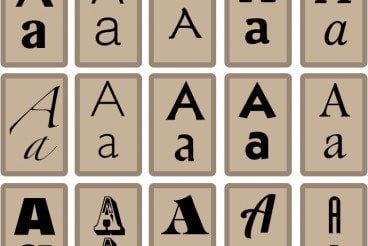
There’s no way to quantify all of the font options available for website designers. Almost every day a new typeface shows up in my inbox or Twitter feed. But not every one one of these typefaces – no matter how beautiful – is right for designing a website.

When it comes to selecting the perfect font, you have think about a variety of things including compatibility, load time and design purpose. Today, we have seven tips to help you select and use the best web font for your design project.
10 Tips for Delicious Menu Design

Inspiration / 25 Mar 2015

10 Tips for Delicious Menu Design

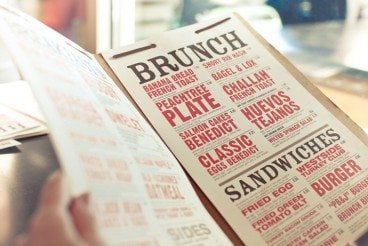
Have your ever thought about the way food items were presented to you on a menu? Can something as simple as a menu design determine what and where you will eat? Creating a design for a restaurant menu – paper copies for the table and online versions – is a vital part of the food industry because the way things look can impact sales.

The topic got recent attention thanks to Brian Wansink, who wrote “Slim By Design” and a recent paper for the International Journal of Hospitality Management, asserts menu design can impact exactly what someone orders. And it is all based on simple elements that we use every day from bold lettering to images to creating hierarchy on the canvas. Here are 10 ways you can use some of that information and other techniques to create an absolutely delicious menu design.

The Complete Guide to an Effective Card-Style Interface Design

Layouts / 18 Mar 2015

The Complete Guide to an Effective Card-Style Interface Design

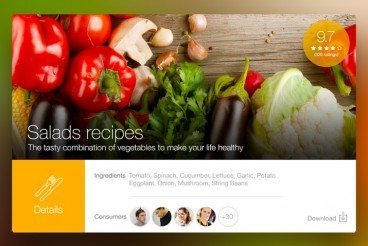
Card-style architecture is one of the biggest things in web design, and mobile design in particular. From apps to responsive websites, the card-style format is popping up everywhere.

And for good reason. Mobile card design looks nice, works well on a variety of devices and creates distinct organization and a method for content delivery. That’s why many large, well-known brands are using the card format and many smaller design and development groups are following suit.

10 Tips for Designing Icons That Don’t Suck

Graphics / 12 Mar 2015

10 Tips for Designing Icons That Don’t Suck

Almost every designer is thinking about app design these days. One of the smallest features of every app is the icon used to represent it on the screen of every mobile device and in the app stores. Designing a great icon is more than just putting a logo in a box. You need something that stands out among all the other app icons out there.

A good icon can be used in a variety of ways – for apps, social media and even on smaller printed projects or business cards. And all it takes is a little design and planning.

Google Material Design: Everything You Need to Know

UX Design / 24 Feb 2015

Google Material Design: Everything You Need to Know

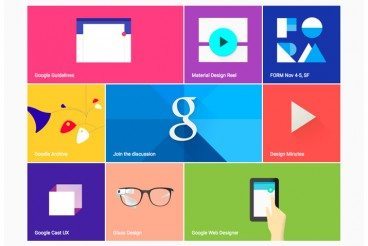
You probably keep hearing the phrase “material design” popping up in conversations. The concept is pretty new; it was introduced in the summer and references a new design language from the folks at Google.

But material design is more than just an idea; it is likely to cause designers to completely rethink web and app design processes. Sites are already beginning to role out design schemes using Google’s material design documentation. So now is the time to learn what it’s all about and if a material design framework is in your future.

Minimal Design: How to Design More With Less

Minimalist Graphic Design / 23 Feb 2015

Minimal Design: How to Design More With Less

Minimalism and the use of whitespace are big design trends right now. Mastery of these techniques might look easy at first glance, but it is actually quite difficult to design with so much open space and so few objects. It can be hard for clients to come to terms with because they often want as much information as possible on a canvas.

But many designers like the look of minimal styles and maximizing whitespace can be a fun challenge. It’s a technique that translates well across mediums and can be used in print, web design and on packaging. Here, we’ll look at the trend and how to design more with less.

Understanding and Working With Aspect Ratio

Layouts / 17 Feb 2015

Understanding and Working With Aspect Ratio

Every image, every canvas, every frame has a shape. And often that shape is a rectangle. Even more common is a rectangle of a particular proportion based on medium.

From cameras to television to movies to computer screens, every medium has an almost distinct shape on to itself. That can be a challenge for designers, especially when you have to crop and convert content and information to fit a variety of mediums. Because of all these different shapes, understanding aspect ratios can help you easily move images and designs from one medium to another.

6 Tips for Designing Signs and Billboards

Graphics / 16 Feb 2015

6 Tips for Designing Signs and Billboards

Your next project assignment: designing a sign for an upcoming event. It will be displayed on billboards around town and printed on smaller yard signs as well. If you are already panicking at the idea, don’t worry — designing a sign is not much different than any other project.

The big difference is scale. It’s going to be a lot larger in size than what you might be used to. Other things to think about when designing signage are location, color, typography, contrast and material the sign will be printed on. Thinking about each of these factors in advance can make for a better sign design experience.

How Color, Type and Space Can Impact Mood

Graphics / 12 Feb 2015

How Color, Type and Space Can Impact Mood

Do you ever think about mood when you are designing? Mood has impact in two ways – the mood of the project itself and the mood of users. Together they create an experience that connects each user to the project.

While you can’t always account for the mood of users, or their good and bad days, you can create an aesthetic that emphasizes the right mood for your project. Three basic design techniques – color, typography and space – are key components for establishing the mood of a project.

10 Tips for Designing Static Ads

Graphics / 21 Jan 2015

10 Tips for Designing Static Ads

Designing the perfect static ad is no easy feat. It might even be impossible. Designing ads can go against many of the things you think as a designer. Many companies want to cram as much information into a space as possible and many users put up roadblocks when it comes to viewing ads.

The catch is creating something that people want to interact with, despite the fact that it’s an ad. The advantage of a static ad is that is seems less obtrusive than some animated, audio or video options. They also have a classic style about them that makes designing fun. Here are 10 tips for creating an ad that people will look at, with some ads as they actually appear on popular websites.

Designing for the Interstitial Experience

UX Design / 5 Jan 2015

Designing for the Interstitial Experience

Yes. Those little pop-ups matter, and are starting to matter more every day. Interstitial space – and content for it – is becoming an increasingly popular part of designing for the web. From ads, to forms, to bits of information, the interstitial experience is a vital part of the design process.

The dilemma for designers is to create something that users want to look at and not feel annoyed by. Here we’ll work to gain a better understanding of interstitial space and how you can work within it well.

Designing Hover Styles and the Future of the Technique

UX Design / 24 Dec 2014

Designing Hover Styles and the Future of the Technique

Despite arguments that hover styles are dead, these small boxes that pop-up over images, text or other elements on websites are still found all over the web. Designers like them for an added bit of style and information; users like them for functionality. (They are only “dead” because hover styles don’t work without a mouse-over).

The UI function is still there for now. And if you opt to use it, you’ll want to create well-designed hover styles that engage users. You’ll also want to think about how to alter these areas of your website for responsive sites.