Search Results For: effects

20+ Minimal Bootstrap Templates

Bootstrap / 29 Aug 2017

20+ Minimal Bootstrap Templates

Clean, minimal layouts are all the rage in web design these days. Whether it’s to have your work stand out in your portfolio, send a clear business message, or showcase your blog content — a minimal theme or template might be the answer.

Today, we’ve collected a selection of minimal Bootstrap templates that fit the trend. Most simply use HTML and CSS with Bootstrap as the foundation, but some are also integrated with WordPress as well. All of these templates are fully responsive, flexible, clean, search engine optimized and come with an advanced framework with plenty of powerful and flexible options.
8 Ways to Use Hand Drawn Icons & Elements

Graphics / 7 Aug 2017

8 Ways to Use Hand Drawn Icons & Elements

While there’s often a focus on pixel-perfect design elements, they aren’t suitable for everything. Sometimes you want something with a little more… whimsy. Something a little more authentic!

Hand drawn icons or elements can be just the right design technique to add something special to a project. While most designers won’t go crazy with elements that appear to be hand-drawn, a few touches can add a personal feel that users are drawn to.

It’s something that’s trending in web design as well. From a squiggle in an icon, to a full-experience that’s equal usability and art, hand drawn elements are a popular design option. Here are eight fresh ways to use this trend!

12 Fun CSS Text Shadows You Can Copy and Paste

CSS / 19 Jul 2017

12 Fun CSS Text Shadows You Can Copy and Paste

Typography is everyone’s favorite toy in web design. One particularly fun tool that CSS gives you to play with your type is text-shadow, which seems simple enough at first but can be used to create some remarkable effects with a little ingenuity and creativity.

Today we’re going to run through several text-shadow examples that you can copy and paste for your own work.

Neon Colors in Web Design: The Do’s and Don’ts

Graphics / 29 Jun 2017

Neon Colors in Web Design: The Do’s and Don’ts

Neon colors are tough to use without clashing with the rest of your design. They work great for signs and lights in real-world applications, but can present major issues in web design, unless carefully implemented.

Today, we’re going to look at ways to effectively use neon colors in your design work, with a list of do’s and don’ts to help you make the most of bold, bright color choices. You’ll be a neon ninja in no time, weaving it through your design work!

Design Trend: Waves and ‘Soft’ Lines

Graphics / 26 Jun 2017

Design Trend: Waves and ‘Soft’ Lines

There’s a softer design trend taking over website projects – waves and soft lines. Where backgrounds have been dominated by single “flat” color, we’re seeing a shift toward curved lines and waves.

The elements are lighter, softer and evoke a different overall feel for the design. What’s especially nice is that waves and softer lines can be used a lot of different ways so that each design feels totally different. (It’s one of those trends that can almost sneak up on you because it appears in so many forms.)

Here’s a look at the waves and “soft” lines trend in website design.

Flat Design: An Evolving Trend

Graphics / 14 Jun 2017

Flat Design: An Evolving Trend

Is the flat design trend finished? We don’t think so. It’s not dead yet. But the trend has evolved to be less stark and more engaging for users.

The early days of flat design were marked by a complete lack of design elements such as shadows, gradients, or realistic elements with texture. Many of those design elements are back, but are being paired with the overall idea of flat design to create a website user experience that’s both simple and easy to engage with. Depending on what side you are on, it might be a better version of flat design.

Here’s a look at the flat design trend evolution, and where we are today.

Poly Shapes: A New Design Trend We Love

Graphics / 5 Jun 2017

Poly Shapes: A New Design Trend We Love

There’s a new favorite shape in design these days – the polygon. These affectionately called “poly shapes” are popping up on websites, posters and in printed projects. And one of the best parts of this versatile trend is that each of these designs is so different.

Polygons are shapes that are defined in elementary geometry as a “plan figure that is bounded by a finite chain of straight line segments in a loop to form a closed polygonal chain.” The shapes can have any number of sides or orientation, can be filled or hollow and can have paths and strokes that intersect. Polygons are typically flat, two-dimensional shapes, although in website projects some polygons animate move and seem to have more 3-D characteristics.

Polygons are a fun technique for new projects or can bring new life to a design that’s feeling a little stale. Here are a few projects with poly shapes to help jumpstart your next brainstorming session.

Design Trend: Experimental Navigation Patterns

Layouts / 22 Mar 2017

Design Trend: Experimental Navigation Patterns

Long gone is the idea that navigation menus must be fixed at the top of a website design. While many designers opt for the safe, consistency of all caps navigation across the top of the screen with sans serif typography, more designs are breaking out of this pattern.

Experimental navigation patterns can be fun and interesting if they are intuitive enough for users to understand reasonably quickly. Different navigation styles can add interest to websites that are small, don’t have a lot of content or want users to move around in a specific way.

While experimental navigation isn’t for every design, it can be a fun alternative for the right project.

Flex Your Design Muscles With These 10 Creative Exercises

Business / 23 Jan 2017

Flex Your Design Muscles With These 10 Creative Exercises

Are you already over all those New Year’s resolutions? Now that we are a little further into the year, it’s time to pause and refresh in a way that will last longer than a fad diet or 30-day gym membership. You need to flex your creative muscles.

You might be surprised at the value of simple design workouts. They can help you forget problems you are actually working on (maybe helping you solve those design dilemmas), and even learn something new.

It only takes a few minutes a week to work through an exercise or two, and really stretch those creative muscles. Pick an exercise from our collection below – each one includes just three steps — and make a date to get in design shape!

How to Design for Long-Form Content

Layouts / 22 Nov 2016

How to Design for Long-Form Content

Forget what you think about user attention spans. Long-form content can be a valuable part of your design strategy (and doesn’t have to be a boring block of ongoing text). Users love a good story and long-form content is a great way to create an immersive and engaging experience.

To keep users interested – and scrolling – you have to design interactions that are visually pleasing and create a consistent experience from the first glimpse to the final act. Here are a few ways to design long-form content that meets those goals with a few examples that are anything but boring.

5 Tips for Mixing Photos & Illustrations in a Single Design

Graphics / 2 Nov 2016

5 Tips for Mixing Photos & Illustrations in a Single Design

Ready to take a design risk? Try mixing photos and illustrations in the same design project. A hand drawn element can add whimsy and interest to a design that includes photography. Conversely, a photo can make a more lighthearted illustrated design seem more real or important.

This technique can be a little difficult to imagine until you see a few examples of how it can work beautifully. Today’s we’re looking at this trend and providing tips and examples to help you develop creative ways to come up with a design of your own.

How to Make Color Overlays Work in Your Design

Graphics / 24 Oct 2016

How to Make Color Overlays Work in Your Design

Color is an important part of almost any design. Whether you are a fan of bright, bold hues or prefer a more minimalist black and white, how you use color can have a great impact on the overall design.

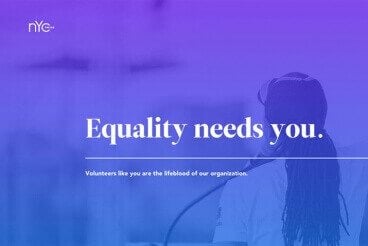
One way to use color to make a statement is with a design that incorporates a color overlay. This means that you cover an image or video with a semi-transparent colored box. The effect can add meaning to an image, bring attention to a design and help you make most of limited art choices.

Today, we’re going to look at a variety of color overlays to serve as a bit of inspiration for creating your own.