Search Results For: graphic design

Why Every Designer Needs a Code of Ethics

Business / 5 Aug 2014

Why Every Designer Needs a Code of Ethics

Many professions have codes of ethics, a common set of guiding principles that help you make fair decisions. Codes often protect both the worker and client from poor business practices.

Designers working in a team or individual environment should be working with a code of ethics. Many designers might even follow multiple codes – one set by an employer, one set by professional organizations and one that is a more personal set of rules and guidelines. One thing is certain: Every designer needs a code of ethics.
Design for Everyone: Considering Accessibility in Visual Projects

Accessibility / 19 Jun 2014

Design for Everyone: Considering Accessibility in Visual Projects

Because design is such a visual concept, we don’t always stop to think about how design can impact users with certain disabilities. From vision to hearing or even touch impairments, how you design a website, brochure or even package can look or work a different way to different people.

And while you can’t design so that every element is perfect in every condition for every user, there are some things you can do and think about to make your design projects more accessible to a larger number of people. Simple techniques such as color choice, texture, shading and sound effects can make a difference to users.

Horizontal Harmony in Design: Keep It Between the Lines

Layouts / 6 May 2014

Horizontal Harmony in Design: Keep It Between the Lines

Horizontal harmony. It’s one of those things that you seem to only notice when it is missing. Horizontal harmony is the relationship between elements across a design. It’s more than lines and rules; it’s also an invisible grid creates a sense of place for design elements.

How can you create horizontal harmony? While some techniques are easier than others, it is not an overwhelming concept. It just takes a little planning. By thinking about things such as a baseline grid, space between lines of text, positioning of elements and the overall aesthetic, horizontal harmony is just part of the design process.

Todoist: A Simple and Powerful Tool for Designers

Software / 31 Mar 2014

Todoist: A Simple and Powerful Tool for Designers

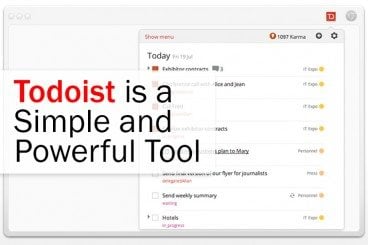
There are so many apps and productivity tools out there, making it hard to find things that fit your needs the best. Some tools are packed with too many gimmicks, which can make it hard to be productive. Others are difficult to use or understand.

Enter Todoist. This tool is simple and powerful. After only five minutes, I was beginning to feel like a super-user. And what’s even better is that it is designed well. Not only does this tool work beautifully, it looks great at the same time. Here’s a look at Todoist, how it works and how you can use it in your workflow.

Tips for Designing Better Mobile Typography

Mobile / 5 Mar 2014

Tips for Designing Better Mobile Typography

Mobile is big right now. But often the typography is small. When it comes to creating great type on small screens, there are plenty of challenges.

So how can you make the most of responsiveness, mobile design and typography? The first step is really understanding type and the second is by thinking about how people read. Put the two together and you will get a handle on creating great mobile type in no time. It’s a skill that every designer needs to master in the digital age.

Understanding Design Copyrights and Trademarks

Business / 27 Jan 2014

Understanding Design Copyrights and Trademarks

Not that long ago we entertained a discussion about design plagiarism here on Design Shack, but what does it mean if your work is stolen? How do you even know if your work is protected? And moreover, what can you do about it?

That’s where the protection of copyrights and trademarks come in. But what are they? And how do they apply to your designed work? Let’s take a look.

Learn by Example: 6 Lessons for Designing Restaurant & Food Websites

Graphics / 22 Nov 2013

Learn by Example: 6 Lessons for Designing Restaurant & Food Websites

Today’s topic is a delicious one: restaurant and food websites. Small businesses pay the bills for freelance designers and local restaurants can serve as a major source of revenue. If you’re embarking on your first restaurant site design though, there are a few things that you should know.

In this article, we’ll learn by example as we take a look at lots of mouthwatering food and restaurant websites. By examining what these designers got right, you’ll help ensure your own success in this area.

Designing With Circles: Tips and Advice

Graphics / 3 Oct 2013

Designing With Circles: Tips and Advice

Once shunned by designers, circles seem to be making a comeback. The perfectly round shape – and its oblong counterparts – can be difficult to work with. The shape does not stack as well as the more standard rectangle and creates a much different overall feel.

The circle is a perfect shape, meaning that it is the same no matter how you look at it. It is complete and in harmony with nature – consider how many natural elements are circle-based. So, as a designer, how can you make circles work for you?

Pros and Cons of Working With Design Kits

Graphics / 23 Sep 2013

Pros and Cons of Working With Design Kits

Design kits seem to be everywhere these days. From UI kits, to templates and grids, to complete design kits, what makes these tools so popular (and what are the disadvantages)?

Today we’re going to take a look at the pros and cons of using different types of design kits, and even show you a few kits in the examples that might be worth trying out for various purposes.

How to Design a Resume That Stands Out

CV & Resume Templates / 24 Jun 2013

How to Design a Resume That Stands Out

Resumes are everywhere. They can be good, bad or downright embarrassing. But one thing is certain — if you want a job, yours must stand out in a good way. The design needs to reflect your personality, and the information needs to be organized, relevant and spot-on.

More often than not in today’s job market, you may even have several versions of your resume; one tailored toward different types of companies, one for potential clients or another as a showcase piece in your portfolio.

Pinterest for Designers: Using It to Your Advantage

Inspiration / 22 May 2013

Pinterest for Designers: Using It to Your Advantage

Design inspiration is all around us. And every day there are new tools popping up to help us collect and share that inspiration. One of those great tools is Pinterest. The image collection platform is a fantastic source of design inspiration, from typography to print, web or packaging design.

Newer additions to the service, such as boards for business and hidden boards make the tool even more useful. Haven’t gotten on board with Pinterest yet? Not sure how to make it work for you? Read on.

How to Choose Effective and Attractive Icons in Your Designs

Graphics / 20 May 2013

How to Choose Effective and Attractive Icons in Your Designs

Icons can be considered one of the universalities of web design; almost any website benefits from the addition of at least a few of them. So it’s tempting to assume that if you sprinkle in a handful of these little pictures, your job is done. But there’s a lot more to it than that: good icons should feel like they’re visually integrated into the group of images that they’re in, as well as into the site design as a whole. They need to have a conceptual clarity and purpose that goes beyond being mere eye candy. Any icon that doesn’t serve a stated purpose, or doesn’t convey the right concept in its imagery, is one that needs to be reconsidered.

Of course, there’s room for interpretation and generalization with any kind of imagery, but icons are not mere illustrations that are used purely to break up space and add interest: they’re visual metaphors that can invest meaning into a subject at a single glance; and as such, they’re a powerful tool for improving user experiences.