Typography - Page 6

Learn how to work with fonts, lay out typography, pair different typefaces, and find collections of inspiring fonts to use in your next project.

Color Fonts: A Beginner’s Guide

Typography / 31 May 2017

Color Fonts: A Beginner’s Guide

So what in the heck is a color font? It’s a term that keeps popping up and is starting to gain traction, although use in large design projects is still in its infancy.

Vendors such as Adobe’s Typekit have started to release some color font options with browser support, so there’s some movement toward wider use. Some have even called color fonts “the next big thing in web design.”

Here, we’ll look at the trend and let you decide how big – or not – this concept will be.
Tips for Using Contrast to Enhance Readability

Typography / 15 Feb 2017

Tips for Using Contrast to Enhance Readability

Good design is readable design. Without a clear message, displayed in an easy-to-digest way, it’s easy to lose the meaning of any piece of design work. That’s why it’s so crucial that any design must be easy to read.

Designing for readability is a lesson in typography, but also in contrast. Contrast is the key to enhancing readability, and helping create a flow through the text in a logical manner so that users understand exactly what you want to say.

Design Trend: Square-Stacked Typography

Typography / 25 Apr 2016

Design Trend: Square-Stacked Typography

Everywhere you look these days, it seems like someone else is using stacked typography. Particularly square stacked typography. It’s a common design trend that we’re seeing more and more.

The trend is hard to ignore, and is worth replicating because this aesthetic is charming and impactful. There are plenty of ways to combine words and lines of lettering to create a design that is attention-grabbing. Today, we’ll look at exactly how to make the most out of the square stacked typography trend with examples from the Design Shack gallery. Read on for some great examples, and helpful tips!

What Does That Say? How Typefaces Add Meaning to the Design

Typography / 6 Apr 2016

What Does That Say? How Typefaces Add Meaning to the Design

Can something as simple as a typeface change the meaning of words and an entire design. Of course! A typeface can add a new level of emphasis or meaning to your message.

It can help you connect with users, establish brand, and set the tone for your entire project. The wrong typeface can leave a design feeling flat, disjointed or even give users the wrong impression about your brand. Now let’s take that knowledge and add a little practical application.

Web Design Debate: Do I Really Need to Use Sans Serif Fonts?

Typography / 26 Oct 2015

Web Design Debate: Do I Really Need to Use Sans Serif Fonts?

There’s long been a theory that serif typefaces are for printed projects and sans serifs are for website design. But with more high definition screens and great type options available, that rule just isn’t so much a rule anymore.

Whether you prefer serifs or sans serifs (or a combination of the two), the main objectives when choosing typefaces for digital design projects should be readability and legibility. Simple, you need to pick fonts that are sharp and easy to read on the screen. Part of this is related to usage, such as size and placement of text, and then to the style of typeface you choose.

Kinetic Typography: An Introductory Guide

Typography / 5 Aug 2015

Kinetic Typography: An Introductory Guide

Kinetic typography seems to be everywhere these days. From television commercials to website landing pages, movable type is a popular visual tool. This popularity could come from a number of reasons but one obvious factor is that it catches your attention. People tend to be drawn to words and want to read them.

Kinetic typography puts this together with some simple animations to create words that move on the screen, grabbing your attention and engaging the senses. So let’s take a look at kinetic typography and how you can integrate it into some of your design projects. (Note: The examples in this article include animation; click the images for links to the original sources to see them in action.)

Typekit vs. Google Fonts: Pros and Cons

Google Fonts / 21 Jul 2015

Typekit vs. Google Fonts: Pros and Cons

Choosing the right font is an important aspect of any web design project. There are hundreds, even thousands, of great options out there and many can be used with free licenses thanks to tools such as Adobe Typekit and Google Fonts.

But is one service better than the other? Is there a benefit to Google Fonts or Typekit over the other? And just how can you get started with these tools if you have not used them yet. You are in luck, because today we’ll answer those questions.

7 Tips for Choosing the Best Web Font for Your Design

Typography / 30 Mar 2015

7 Tips for Choosing the Best Web Font for Your Design

There’s no way to quantify all of the font options available for website designers. Almost every day a new typeface shows up in my inbox or Twitter feed. But not every one one of these typefaces – no matter how beautiful – is right for designing a website.

When it comes to selecting the perfect font, you have think about a variety of things including compatibility, load time and design purpose. Today, we have seven tips to help you select and use the best web font for your design project.

The Complete Guide to Special Characters

Typography / 21 Apr 2014

The Complete Guide to Special Characters

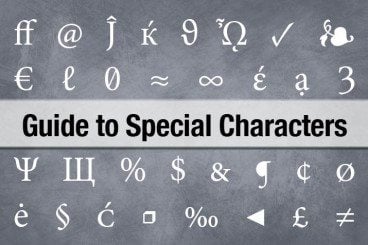
Not everything is as easy as ABC or 123. Sometimes your copy might require a character outside of the basic alphabet. That’s where special characters and glyphs come in. (Look around, they are more common than you might think at first.)

Depending on your workflow, inserting a glyph can be as simple as a keystroke or a multi-step process. Much of it depends on the software you are using, typography palette and how the final product will be published. Here, we are going to take a look at special characters, examples of use and tips for success.

Creating Visual Hierarchy With Typography

Typography / 3 Mar 2014

Creating Visual Hierarchy With Typography

Visual hierarchy is an important element in any design project. It tells people where to look and what things on the screen or printed page are most important. Hierarchy gives readers a sense of how to actually read material from start to finish with visual cues and flow.

While you can create visual hierarchy using a number of different tools, today we are going to look at ways to create structure with just typography. (And take a look at the images used throughout this post; they are all examples of great type hierarchy in action.)

Why I Love Ampersands & You Should Too

Typography / 10 Feb 2014

Why I Love Ampersands & You Should Too

Without a doubt, the most beautiful character in the English language is the ampersand. The single character comes in so many fashions – from the simple & to the casual E- to t-style representations.

But where did this character come from? What does it mean? And most importantly how can you take advantage of using it in your design projects? Here we will take a look at my favorite character from its history to uses and a gallery of great ampersands to inspire you.

Mixing Typefaces: Tips and Techniques

Typography / 19 Mar 2013

Mixing Typefaces: Tips and Techniques

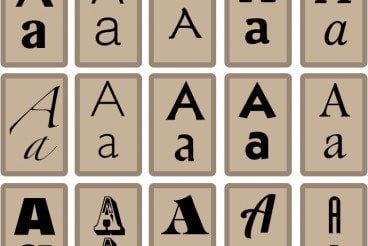
Mixing typefaces can be on of the most rewarding, and trickiest parts of the design process. Creating the perfect pairing of typography can result in a beautiful and perfectly readable outline for almost any project.

But how can you get started? What should you consider when mixing typefaces? While the answers aren’t black and white, there are a few things you can do. Think about contrast, x-heights, shapes and slants and overall mood when combining typefaces for any project. In this article, we’ll be delving into each of these in a little more detail!