Typography - Page 5

Learn how to work with fonts, lay out typography, pair different typefaces, and find collections of inspiring fonts to use in your next project.

What Is an Icon Font? (And How to Use One)

Font Collections / 18 Nov 2019

What Is an Icon Font? (And How to Use One)

Icon fonts are a popular solution to a common CSS problem; how to incorporate web icons into your website design in an efficient, fast-loading way.

With plenty of services available to make choosing and using an icon font easy, you don’t have to create your own from scratch. Icon fonts are all over the internet.

But what exactly is an icon font? And how do you use them? Here’s a guide to everything you need to know about icon fonts.

What’s the Best Font for Your Resume or CV?

CV & Resume Templates / 3 Sep 2019

What’s the Best Font for Your Resume or CV?

It might sound a little silly at first, but the typeface you select for your resume design can speak volumes to potential employers. The font represents your design style and professionalism. It can also impact how the person looking at your resume perceives the information at hand.

The typeface you select makes a first impression with every person you might meet in the interview or hiring process. (They’ll likely see your resume before they ever meet you.) Make sure to set the right tone from the start.

We’re exploring the best free fonts for resumes today. Here are a few top-notch font choices that are resume-ready, and all completely free!

What’s the Deal With Em and Rem?

Typography / 3 Sep 2019

What’s the Deal With Em and Rem?

With all the talk about designing for responsive websites, two little words keep cropping up – em and rem. But what are they?

Em and rem, along with pixels, are units and methods to measure and resize type. Em and rem are relative, rather than static, units and are being used more and more for responsive web design schemes. Let’s dive into this concept today and explain things a little more clearly!

What’s the Best Font for Subtitles? 5 Examples Compared

Font Collections / 18 Mar 2019

What’s the Best Font for Subtitles? 5 Examples Compared

When it comes to choosing the best font for subtitles (or any other captioning), nothing matters more than readability. Clear subtitles are more than just identification on the screen, they can be a means of accessibility for many users.

You’ve probably seen a fair share of good – and bad – subtitle font options. (I remember watching a movie where the subtitles were yellow and nearly unreadable in some scenes. That’s not a good choice!) Closed captions are also common for viewing video on social media – who wants to play the sound at work? – and to understand content in another language.

Today, we’ll look at some of the best fonts for subtitles, and tips for creating small text elements on a moving video background that people will actually want to read.

Choosing a Resume + Cover Letter Font? 10 Tips & Examples

CV & Resume Templates / 4 Mar 2019

Choosing a Resume + Cover Letter Font? 10 Tips & Examples

What is the best font for your resume? It’s not a loaded question. Too often people over think typography choices for resumes or cover letters because they think the type has to look “designed.” The reality is that it just needs to be highly readable.

So where do you start? Today, we’ve got ten great options to help you choose a readable, well-designed typeface to help your resume or cover letter stand out.

All these fonts stand out from the crowd, while also keeping your resume clear, classy, and readable!

Choosing the Best Logo Fonts: 10 Tips & Examples

How to Design a Logo / 10 Oct 2018

Choosing the Best Logo Fonts: 10 Tips & Examples

The font a brand selects for their logo can evolve into lettering that people identify with a company or product. Just think about the typefaces for Coca-Cola, Disney or even eBay. Even if you see those typefaces without the brand names, there’s still an immediate connection.

That’s the value of choosing the best logo font for your brand. So how do you do it?

Here are ten tips to help you choose the best logo font you can with examples of logos that feature amazing typography.

Is Your Website Font Size Too Small? Large Text Is In

Typography / 3 Sep 2018

Is Your Website Font Size Too Small? Large Text Is In

The standards for typography on the web have shifted. Designers are going with bigger, easier to read typography that is more seamless and consistent across devices. The trend toward bigger web typography started with oversized treatments above the scroll, from headlines to more artistic hero header text elements.

Body text sizes concurrently started to increase on mobile devices to enhance readability. And from there, the trend started to trickle down to almost all aspects of web type. If you haven’t thought about the size of copy on your website recently, it’s time to revisit that 12 or 14-point/pixel body copy. Large text is in!

10 Tips for Using Text Effects That Don’t Suck

Typography / 30 Apr 2018

10 Tips for Using Text Effects That Don’t Suck

Adding effects to typography can be a source of heartache for designers. Clients demand a drop shadow or embossing, and you’re stuck with text effects that threaten to ruin a project. What you need is an arsenal of text effects that don’t suck so you can help the client pivot to something a little more classy.

The trick to all of these effects is using them with purpose. Good typography doesn’t need “help.” If a font isn’t working alone, it’s not going to work with a bunch of techniques added either. (You’ll only make something bad even worse.)

The best text effects are nearly invisible to non-designers. Or text effects are used to add meaning to typography or lettering. Here are a few tips for using text effects that don’t suck with some pretty cool examples.

Serif, Sans, Script & Slab: 4 Font Types Explained

Typography / 5 Mar 2018

Serif, Sans, Script & Slab: 4 Font Types Explained

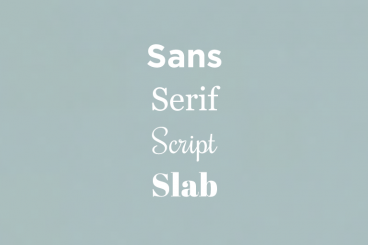
Always wanted to know the difference between serif, sans, script, and slab fonts? Look no further. Take your typography game to the next level, and quit guessing if certain typefaces or font pairs work together. Back your logic with a little design theory!

Having a better knowledge of fonts and typography can make explaining your choices to clients easier (always a bonus), and will give you more confidence when selecting font pairs. Here’s a primer (or refresher) on four common font types and how to use them in your design projects.

How to Design Readable Content for the Web

Typography / 14 Feb 2018

How to Design Readable Content for the Web

Designing content is more than just making something look great. You have to create a design that people will actually read, and help them engage with the content. Sometimes, that’s easier said than done.

People generally have short attention spans, and you shouldn’t expect them to digest every word on the screen. But you can use certain design techniques and elements to help users read as much as possible.

Every Design Needs Three Levels of Typographic Hierarchy

Typography / 15 Nov 2017

Every Design Needs Three Levels of Typographic Hierarchy

One of the most important elements for people looking at anything you design is the type. It needs to be clear and readable and it should direct users through a design, from most important elements to least.

And that, in a nutshell, explains typography hierarchy. But to really master the art of type, you need to understand how to layer type throughout a design to achieve maximum impact. Read on to learn how to master typography hierarchy and create effective type in every project.

Tiny Text: 6 Ways to Use It Effectively in Web Design

Typography / 24 Jul 2017

Tiny Text: 6 Ways to Use It Effectively in Web Design

One of the biggest trends in web design right now is super small. “Tiny” text elements have become a popular idea, but it’s a design trend that has spurred some debate.

There’s no doubt that small text sizes can cause some readability concerns. But when done well, a small block of tiny text can actually help create a point of visual emphasis and draw users into certain parts of the design.

Join us as we take a look at the tiny text trend, with examples to provide some design inspiration.